
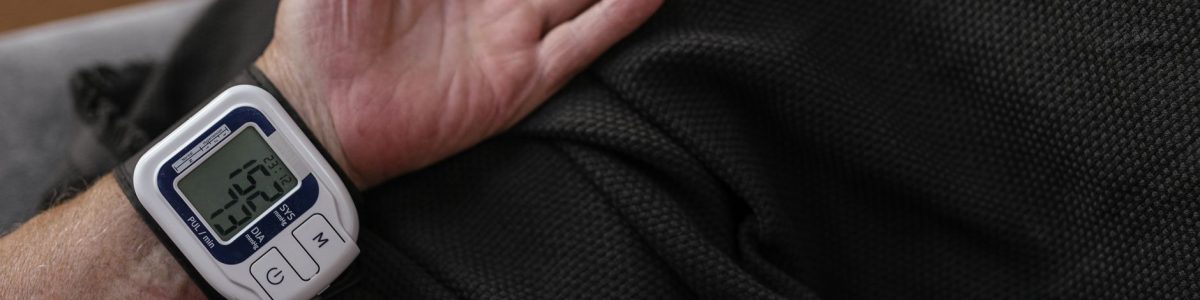
For years, blood pressure was something most of us thought about only when someone placed a cuff around our arm at the doctor’s office.
Today, we know that readings taken at home can provide valuable additional information.
Blood pressure naturally fluctuates throughout the day. Stress, activity, caffeine and even the experience of sitting in a medical office can affect a reading. Some people have higher readings in a medical setting than they do at home. Others experience the opposite—a phenomenon known as masked hypertension, in which blood pressure may appear normal in the doctor’s office but is elevated outside it.
That’s one reason your physician may ask you to monitor your blood pressure at home.
But technique matters.
Getting a Better Reading
Before checking your blood pressure, sit quietly and give yourself a few minutes to settle. Sit upright with your back supported and your feet flat on the floor. Keep your legs uncrossed and rest your arm on a table so it is supported.
The cuff should be placed on a bare upper arm—not over clothing—and using the correct cuff size is important for an accurate reading.
Rather than relying on one number, the NIH’s National Heart, Lung, and Blood Institute recommends taking two to three measurements, about one minute apart, and recording the results. Taking readings at approximately the same times each day can also make them more useful.
Bring the Numbers to Us
One of the advantages of having an ongoing relationship with your physician is that your healthcare doesn’t have to be limited to what happens during an annual physical.
If you’re monitoring your blood pressure at home, keep a record of your readings and share them with your physician. A pattern over time can often tell us more than a single measurement.
And if you own a home blood-pressure monitor, consider bringing it to an appointment occasionally. Your healthcare team can help make sure you’re using it correctly and that the cuff fits properly.
The goal isn’t to become preoccupied with the numbers. It’s to give you and your physician better information about your health.
Source: National Institutes of Health, National Heart, Lung, and Blood Institute (NHLBI), Self-Measured Blood Pressure Fact Sheet and High Blood Pressure—Diagnosis.
Image:
https://www.pexels.com/@shvets-production